A New Lens on an Infamous Legacy: Understanding the Serie Del Hijo De Pablo Escobar
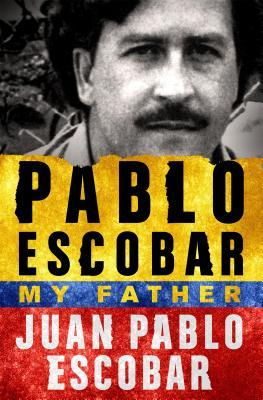
The name Pablo Escobar conjures images of unbridled power, extreme violence, and a lavish yet dangerous existence. For decades, the narrative surrounding the Colombian drug lord has been dominated by tales of his criminal empire, high-stakes chases, and dramatic downfall, popularized by series like 'Narcos' and numerous documentaries. However, a groundbreaking new Disney+ series, 'Dear Killer Nannies: Criado entre sicarios' (raised among hitmen), set to premiere on April 1, 2026, promises to offer an unprecedented and deeply human perspective. This highly anticipated production, often referred to as the Serie Del Hijo De Pablo Escobar, steps away from the mythologized figure to explore the complex reality of growing up as his son, Juan Pablo Escobar, now known as Sebastián Marroquín.
Far from another glorification of crime, this unique series aims to deconstruct the legend through the eyes of a child who loved his father, unaware of the monstrous truth that lay beneath. It’s a narrative pivot that promises to be uncomfortable, poignant, and essential in understanding the profound impact of such a legacy not on the world, but on an innocent life caught in its vortex. The series’ core premise, woven around the paradoxical figures of ‘sicario nannies,’ reveals a story of loyalty, terror, and a childhood unlike any other.
Shifting the Gaze: From Kingpin to Kid in the Serie Del Hijo De Pablo Escobar
Previous portrayals of Pablo Escobar, while often compelling, invariably focused on the criminal mastermind. They chronicled his rise, his brutality, and the extensive manhunt that ultimately led to his demise. While these stories have their place in history, they often overlook the deeply personal and psychological toll on those closest to him, particularly his family. The Serie Del Hijo De Pablo Escobar, Dear Killer Nannies: Escobar's Son Breaks the Myth on Disney+, represents a radical departure from this established formula.
This time, the camera turns inwards, focusing on Sebastián Marroquín's childhood. It depicts a world where luxury and extreme loyalty coexisted with a pervasive, inexplicable violence. For Marroquín, this series is more than just a recounting of events; it's a mission. He has long been a vocal critic of productions that, in his view, inadvertently romanticize his father's actions. Through 'Dear Killer Nannies,' he seeks to correct the narrative, offering a raw and unfiltered account of his experiences to challenge the glorification of crime that he believes has taken root in popular culture. As Marroquín himself has stated, his intention is to "reverse those effects," showing the true, devastating cost of his father's lifestyle.
The series, therefore, is not merely entertainment; it's a vital re-evaluation. It forces viewers to confront uncomfortable truths about admiration, ignorance, and the slow, painful dawning of a child's understanding that his hero father was also a villain to millions. This exploration of the personal, rather than just the political or criminal, adds immense depth and a much-needed human dimension to an otherwise sensationalized story.
The Paradox of the 'Sicario Nannies': Caretakers and Killers
Perhaps the most striking and emotionally resonant aspect of 'Dear Killer Nannies', and indeed the origin of its provocative title, is the portrayal of the men who simultaneously served as Escobar's enforcers and his son's protectors. These were not typical nannies; they were sicarios – hitmen – who executed orders of murder and mayhem for the Medellín Cartel. Yet, they were also the same individuals who guarded, played with, and looked after young Juan Pablo.
This profound contradiction forms the very heart of the Serie Del Hijo De Pablo Escobar. Imagine a child being taught to ride a bike by a man who, hours earlier, might have committed unspeakable acts of violence. Or a caregiver who tells bedtime stories, only to leave to carry out a brutal assassination. For a child, these figures were simply 'nannies' – trusted adults who provided safety, companionship, and structure within a chaotic world they didn't yet fully comprehend. This duality presents a harrowing psychological landscape, raising profound questions about:
- The Nature of Loyalty: How these men reconciled their roles as ruthless killers with their devotion to Escobar's family.
- Childhood Perception: How a child processes and normalizes such extreme contradictions when they are part of their everyday reality.
- The Illusion of Safety: The fragile sense of security provided by these 'nannies' who were simultaneously purveyors of extreme danger.
This aspect of the series offers a unique lens into the intricate web of relationships within Escobar's inner circle, highlighting how the personal and the professional, the domestic and the deadly, were inextricably intertwined. It's a testament to the surreal environment in which Marroquín grew up, an environment where the mundane was constantly intersected by the grotesque, creating a complex and deeply uncomfortable human story.
Unpacking the Myth: A Child's Uncomfortable Truth in the Serie Del Hijo De Pablo Escobar
One of the primary goals of the Serie Del Hijo De Pablo Escobar is to dismantle the myth surrounding Pablo Escobar. For decades, films and series have often, perhaps unintentionally, contributed to a romanticized image of the drug lord, portraying him as a legendary figure of rebellion or an almost invincible force. However, through the eyes of a child, this larger-than-life persona shatters into myriad fragments of uncomfortable truth.
The series masterfully explores the excruciating process of a child discovering that the father he adores, the man who offered infinite love and protection, is also the most feared criminal of his time. This discovery is the emotional engine of the narrative. It’s not just about a revelation; it's about the subsequent psychological journey, the grappling with conflicting emotions, and the agonizing re-evaluation of one's entire childhood. This internal struggle is a powerful tool for viewers to understand the devastating human cost of Escobar's actions, shifting the focus from his grandeur to the profound damage inflicted on those closest to him.
'Dear Killer Nannies' is poised to become a landmark series precisely because it forces us to confront this deeply personal narrative. It challenges viewers to look beyond the sensational headlines and consider the nuanced, often painful, reality of a child's experience. It’s a story about memory, identity, and the impossible choices faced by those who inherit a legacy of violence. For a deeper dive into how this series aims to transform the narrative, read more about Beyond Narcos: Disney+ Reimagines Pablo Escobar Through His Son.
Conclusion: Beyond the Legend, Towards Humanity
The Serie Del Hijo De Pablo Escobar, 'Dear Killer Nannies: Criado entre sicarios,' represents a crucial evolution in the narrative surrounding Pablo Escobar. By centering the story on his son, Sebastián Marroquín, and his unique experiences growing up amidst 'sicario nannies,' Disney+ offers not just another retelling but a profound re-examination. It is a story not of power or crime, but of childhood, memory, and the struggle to reconcile immense love with horrific truth. As viewers anticipate its release on April 1, 2026, the series promises to be an indispensable piece of storytelling, providing invaluable insight into the human cost of a legendary criminal's life and the enduring quest for an authentic narrative.